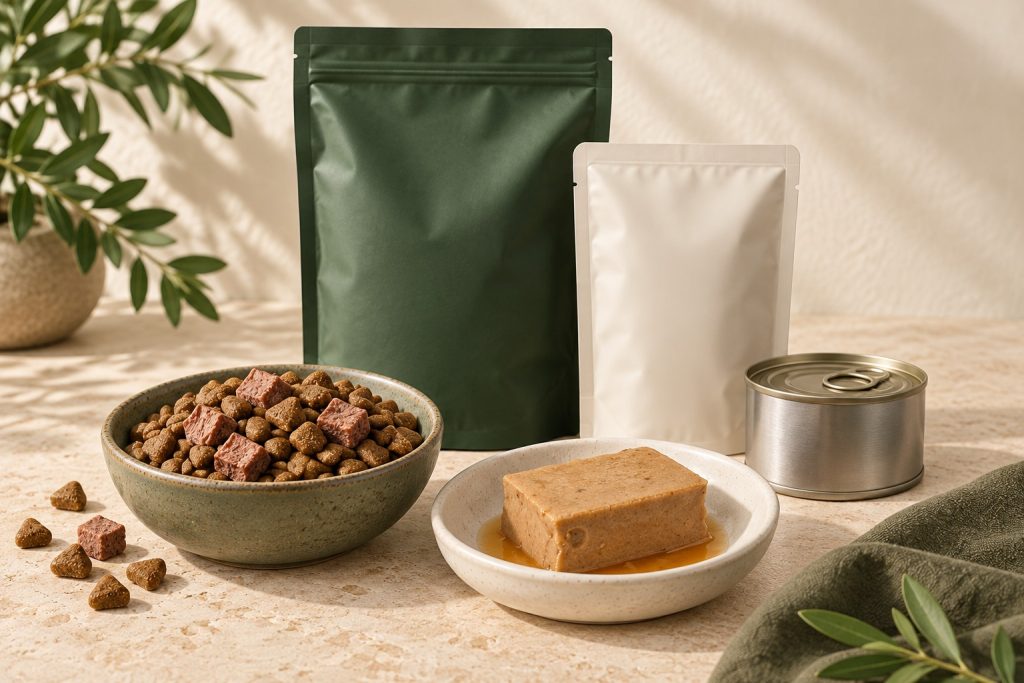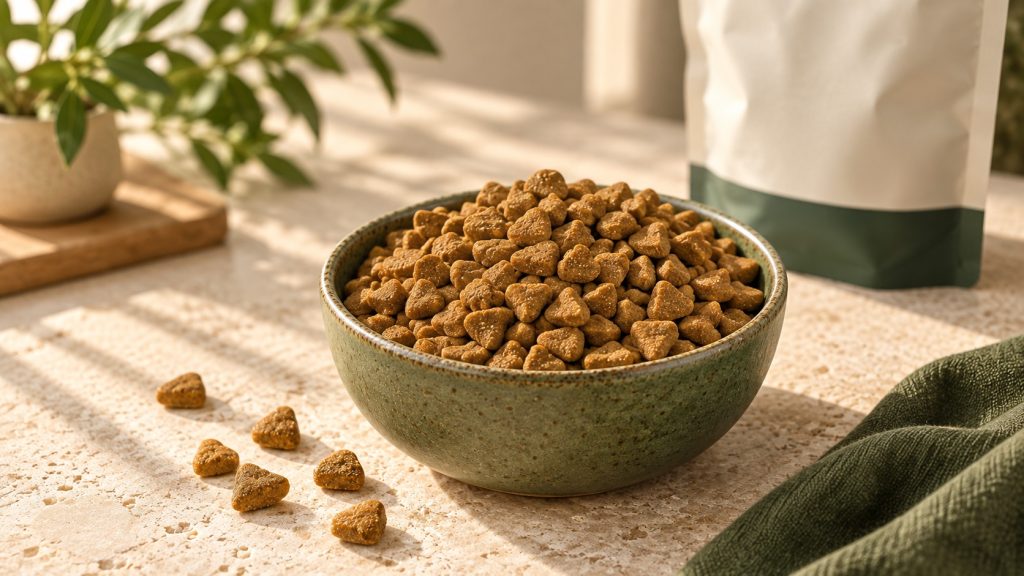

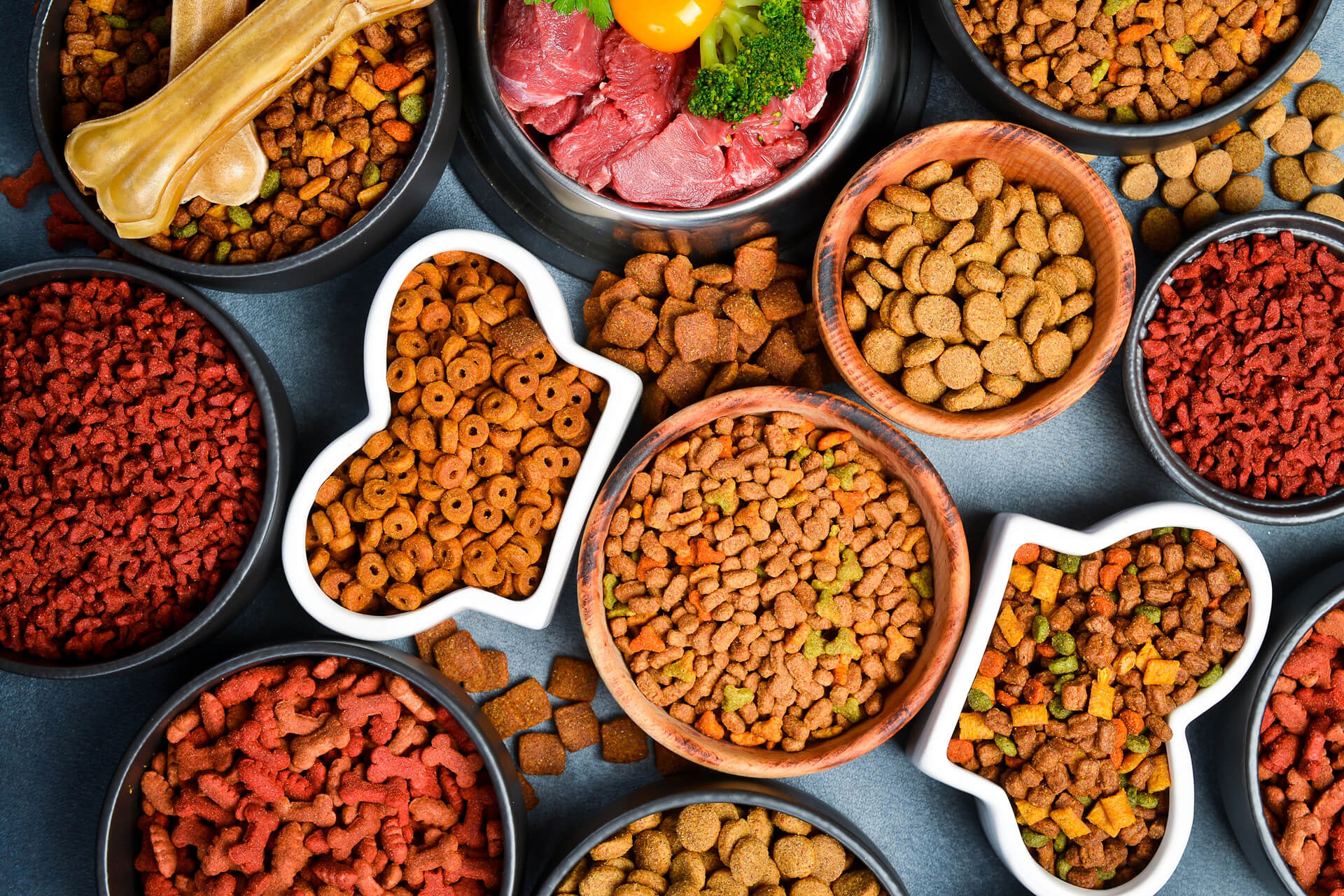
How does a soft mixture become the crunchy kibble you pour into your pet’s bowl? For many dry pet foods, it happens through extrusion. The ingredients are mixed, cooked and shaped, then dried and finished before the bag is sealed.
If you’re developing a dry-food range, you may already have a size or texture in mind. We’ll walk through how extruded kibble is made, what shapes the finished piece, and which details you can check in a sample.
What Is Extruded Kibble?
Extrusion cooks and shapes dry pet food in one continuous process. Cooked dough leaves the extruder through a metal plate called a die. A rotating knife cuts it, and the pieces expand as the pressure drops. The die starts the shape, but expansion and drying affect the size and bite you find in the finished bag.
How Is Extruded Kibble Made?
A die cannot set the finished texture on its own. The mix going in and the drying that follows both affect the piece you pick up.
Mixing and preconditioning the dough
Production begins by grinding and weighing ingredients for a recipe. The dry mix is combined with wet ingredients, water and steam. This hydrates the mix into a workable dough and begins the cooking process before it enters the extruder.
Cooking, shaping and cutting
Inside the extruder, heat and pressure cook the dough as it moves toward the die. The holes in that plate set the outline. A blade cuts the strands as they emerge, and the sudden drop in pressure lets the pieces expand. That expansion is why many extruded pieces look slightly puffed rather than flat.
A different die can produce a different outline, but shape is only part of the brief. The recipe and process settings also affect how much the piece expands and how it feels when bitten.
Drying, cooling and coating
Freshly cut kibble still contains too much moisture for a bag of dry food. It moves through a dryer, then cools before packaging. Many recipes receive a coating of fats or flavors after cooking; that finishing step changes the aroma and surface feel you notice when you open the bag.
Which Extruded Kibble Features Can You Notice?
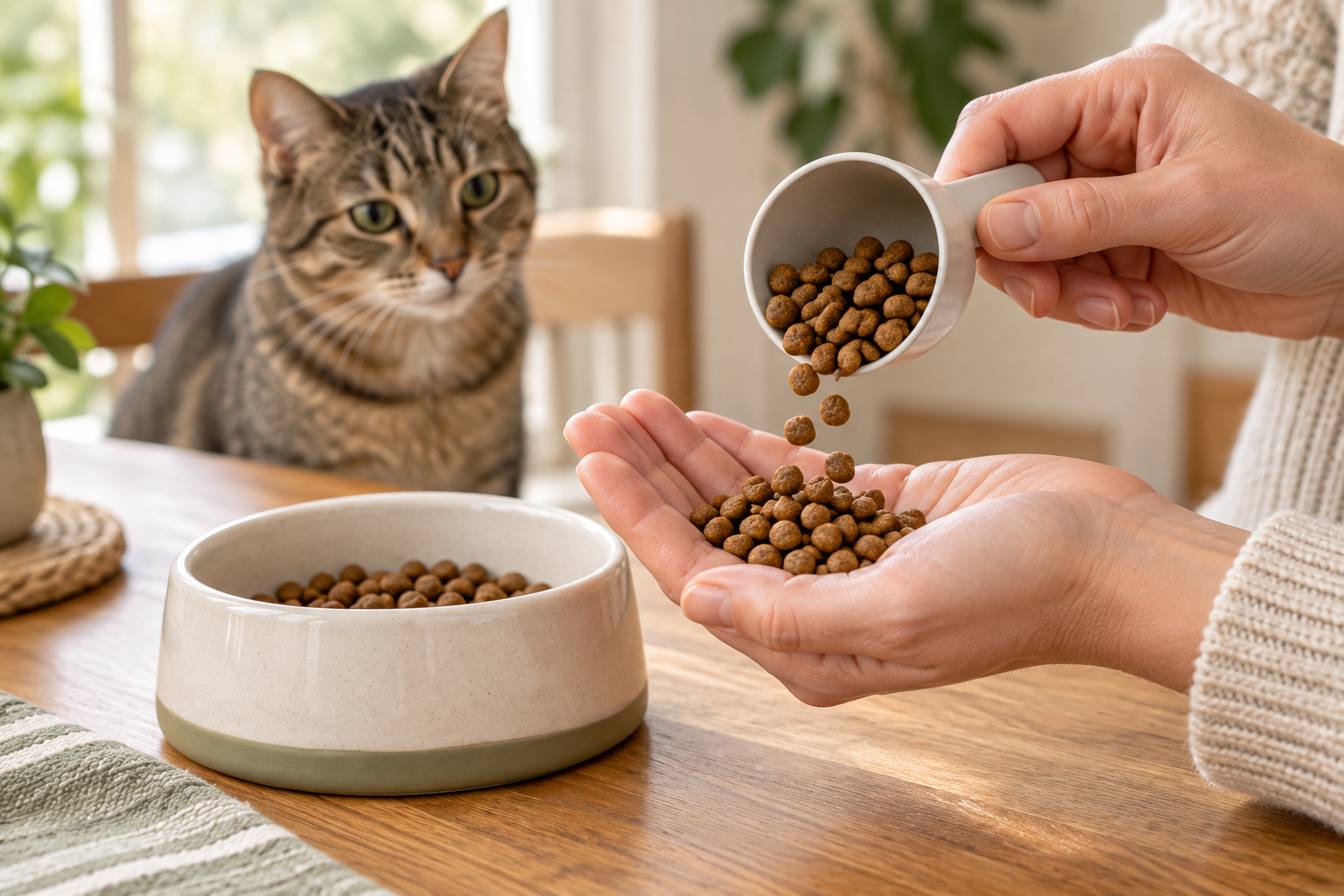
Pick up a finished sample. Is it a small round nugget, a flat disk or another shape? Does it snap cleanly, or leave crumbs in your hand? The die and cutter help determine the outline, while expansion and drying influence the final bite.
Now smell the sample. A surface coating can change its aroma and the way the piece feels. When you discuss a new range with us, these details are more useful than asking for “standard kibble”: we can look at the piece you want to make.
What Are the Benefits of Extruded Kibble?
For the person filling a bowl, dry kibble is easy to measure and serve. An unopened bag can sit in the pantry without a refrigerator, and the pieces work with a scoop or feeding puzzle. Drying removes moisture that would otherwise shorten storage; packaging helps protect the food until it is used.
Now imagine two SKUs on the shelf. A small-dog formula may call for compact pieces, while a larger-dog formula might use a different outline and bite. A cat formula could use another coating to give the food a different aroma. The die, recipe and coating can be developed together, so each finished piece fits the product you actually want to sell.
How Can Freshbite Develop Extruded Kibble With You?
At Freshbite, we make private-label extruded kibble and work with brands on the recipe, piece size, shape and flavor coating. If you have a target product in mind, we can discuss those details together and use a sample to settle the specification before production. You can also browse our dry food range to see where extruded kibble fits alongside other formats.
Extruded Kibble FAQs
Is every dry kibble extruded?
No. Dry pet food can also be baked or made by other processes. The word extruded tells you which production route was used.
Why does extruded kibble puff up?
The dough is under pressure inside the extruder. When it passes through the die into normal air pressure, the piece expands before it is dried.
Is extruded kibble baked afterward?
Extrusion cooks the dough. The cut pieces are then dried, often with heated air; drying is not the same process as making oven-baked kibble.
Can the shape and size be changed?
Yes. The die and cutter help set the outline and size, while the recipe and process affect the final piece. We confirm the target against a sample rather than a drawing alone.
Why is kibble coated after cooking?
Coating can add flavor and change the aroma or surface feel of the finished piece. Its ingredients depend on the recipe.