
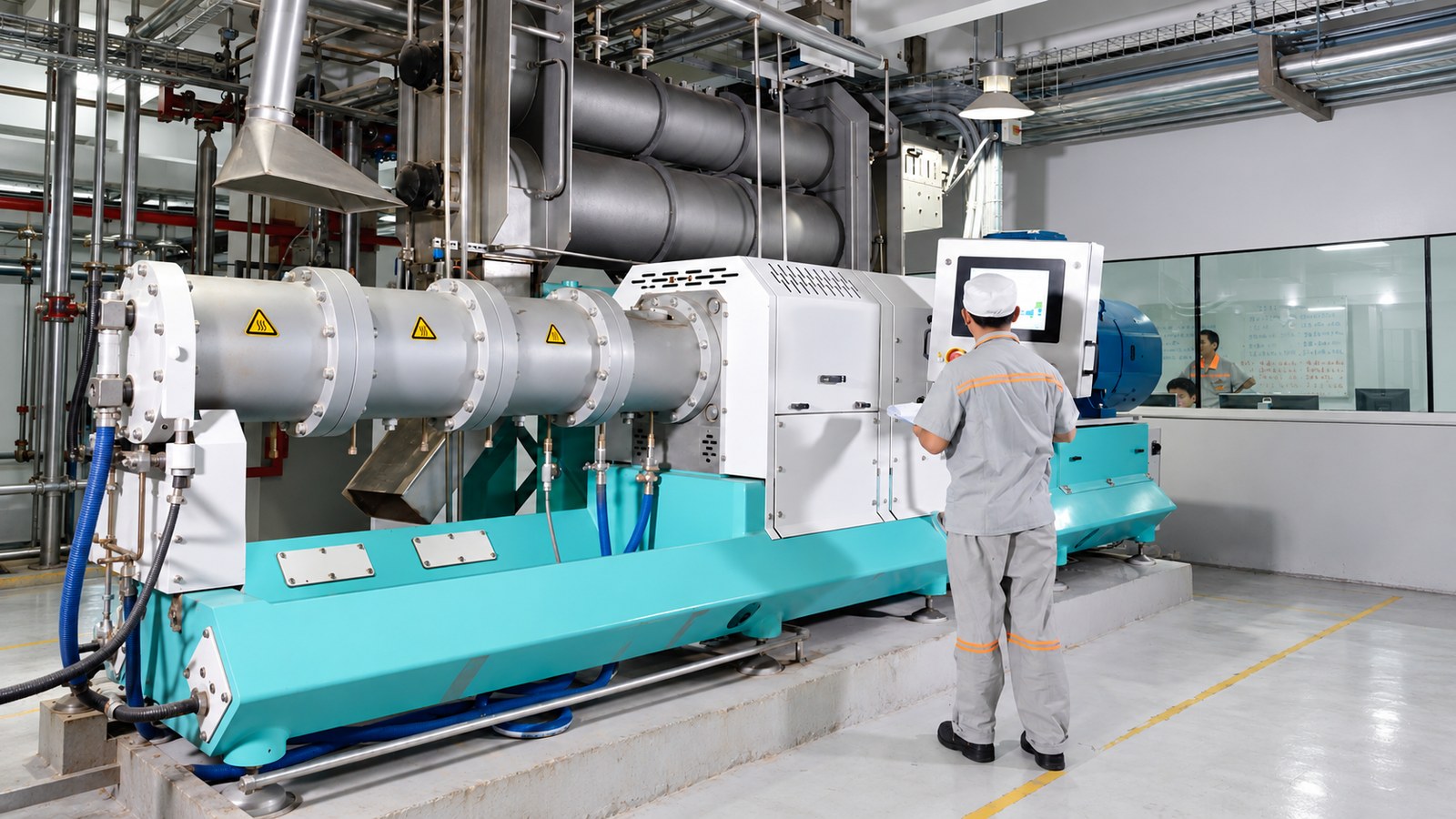
Dry dog food is made by mixing ingredients into a dough and cooking it, either under pressure in an extruder that shapes the kibble before it’s dried, cooled and often coated, or slowly in an oven. Wet dog food is mixed, filled into a can, pouch, tray or carton, sealed, and then heat-treated inside that sealed container. So the answer starts with the format. If you’re building or sourcing a range, the format also decides which production line the product runs on, what it can be packed in and how the minimum order is quoted.
How Dog Food Is Made: Dry Kibble Step by Step
Extruded kibble is made by grinding and mixing ingredients to a recipe, turning the mix into a dough with water and steam, and cooking it under pressure in an extruder. The dough leaves through a die and is cut to size as it expands, then dried, cooled, often coated with flavors, and packed.
- Ingredient intake and checks. Raw materials and packaging are checked when they arrive.
- Grinding and mixing. Dry ingredients are ground and blended into a dry mix that follows the recipe.
- Cooking and shaping. In a preconditioner, water, steam and wet ingredients turn the dry mix into a dough and start the cooking. The extruder then cooks the dough under pressure and pushes it through a die plate, where a rotary cutter slices the strands to size as they expand.
- Drying and cooling. The kibble is air-dried in an oven, then cooled. Lower moisture keeps the food fresh and helps prevent spoilage.
- Coating. In a revolving drum, the kibble is often coated evenly with flavors for taste and with preservatives that protect it through its shelf life.
- Packing. The finished kibble is filled into its packaging and sealed.
In dry food, animal ingredients can be added as meals, such as chicken meal. The raw material is cooked, the fat is removed and the rest is dried before it joins the dry mix. Many pet food ingredients are animal or fish derivatives or by-products, meaning parts of the animal surplus to what the human food industry uses, such as liver, kidney and lung.
Extrusion vs Oven Baking: Two Ways to Cook Kibble
Extrusion cooks the dough under pressure. The die plate sets the kibble’s shape and the cutter sets its size. FreshBite’s extruded kibble comes out crisp, with a consistent shape. Our guide to what extruded kibble is goes further into the extruder itself.
Baked kibble is slow-baked in an oven instead of being cooked under high pressure in an extruder, and the finished kibble differs from extruded kibble in texture, appearance and aroma. We make baked kibble in dog and cat ranges, either from an existing formula in our portfolio or as a custom recipe.
How Wet Dog Food Is Made: Sealed, Then Heat-Treated
Wet food is made in the opposite order from kibble: the food is sealed into its container first and then heat-treated inside it.
- Prepare and mix. Ingredients are prepared and mixed to the recipe.
- Fill. The mix goes into cans, pouches, trays or cartons.
- Seal. Each container is hermetically sealed.
- Heat-treat in the container. The sealed containers are heat-treated, which cooks the food inside them.
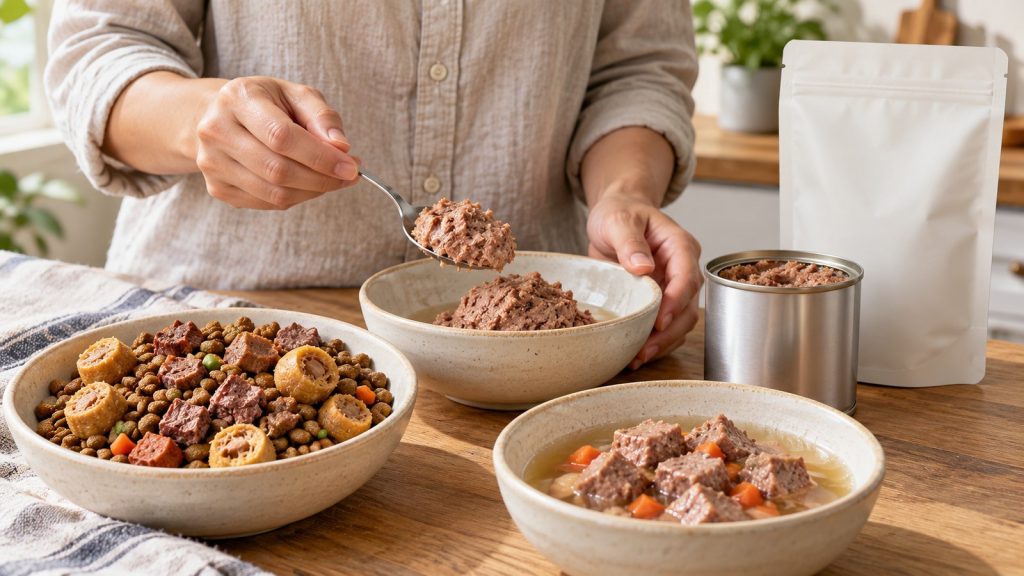
Because the food is heat-treated after sealing, it stays sterile through its shelf life or until the container is opened. That’s the core difference in how the two formats keep. Kibble relies on low moisture after drying, and its coating often carries preservatives. Wet food relies on heat treatment inside a sealed container. The finished product can be chunks in gravy, sauce or jelly, a loaf or a mousse.
The container is part of the process. It’s sealed before the heat treatment and goes through it with the food, so it has to be chosen early. FreshBite runs a Tetra Recart carton line for wet food, and brands working with us can put their wet recipes in cartons.
Freeze-Dried Kibble: Two Processes in One Bag
FreshBite’s freeze-dried kibble, made in dog and cat ranges, is dry kibble blended with visible freeze-dried pieces. Freeze-drying removes moisture from frozen ingredients without high-temperature cooking, so the pieces reach the bag by a different route from the kibble. They can be selected meats, fruits, vegetables or functional ingredients, each reviewed against the formula.
Only the pieces are freeze-dried, so the product as a whole isn’t a fully freeze-dried food. The approved product specification confirms its storage, shelf life and feeding instructions.
Four Dog Food Formats Side by Side
| Format | How it’s cooked or preserved | Texture | How it keeps before opening | Complete diet? |
|---|---|---|---|---|
| Extruded kibble | Cooked under pressure in an extruder, then dried and cooled | Crisp, consistent shape | Low moisture after drying | Depends on its formula |
| Baked kibble | Slow-baked in an oven, without high-pressure extrusion | Texture, appearance and aroma differ from extruded | As a dry food | Depends on its formula |
| Wet food | Sealed in a can, pouch, tray or carton, then heat-treated in the container | Chunks in gravy, sauce or jelly; loaf; mousse | Sealed and heat-treated; sterile through its shelf life or until opened | Depends on its formula |
| Freeze-dried kibble | Dry kibble blended with freeze-dried pieces; only the pieces are freeze-dried from frozen, without high-temperature cooking | Kibble with visible freeze-dried pieces | Storage and shelf life set in the approved product specification | Depends on its formula |
A wet or dry product can be labeled a complete daily diet only when its formula and final nutritional specification support it, so settle that question at the recipe stage. We make all three kibble formats in the table; see our dry pet food options. Raw and cold-pressed foods are separate formats with their own processes.
Quality Checks in Dog Food Manufacturing
Quality control starts before anything is cooked. For our extruded kibble, incoming ingredients and packaging materials are checked, and batch records trace each batch back to its raw materials. Our guide to pet food quality control stages covers the full sequence these checks belong to.
Private Label Dog Food: What Your Brand Decides
If you’re launching a private label range, six decisions sit with you. Our OEM and ODM services work from either an existing formula or a custom recipe.
- Format. Extruded, baked or freeze-dried kibble, or wet food in Tetra Recart cartons.
- Formula route. An existing formula from our portfolio, or a custom recipe built on the protein source you choose.
- Kibble specification. Size, shape and flavor coating for extruded kibble; the freeze-dried inclusions for mixed kibble.
- Sampling. Samples typically take 7 to 14 working days, and the final recipe is confirmed after sample evaluation.
- Packaging. You choose the pack format and supply the artwork, and we advise on packaging structure.
- Order quantity. The minimum order quantity is quoted per product type, formula, SKU count, kibble specification and packaging format, so it follows from the choices above.
FAQ
What is the main ingredient of dog food?
No single ingredient is the main one in every dog food, because the recipe decides it. Formulas typically pair animal ingredients, from meat and fish to by-products such as liver, kidney and lung, with grains or vegetables.
Why is kibble coated after drying?
The coating adds flavor and often includes preservatives against spoilage. On our extruded kibble, the flavor coating is one of the specifications a brand can customize.
Is wet dog food cooked in the can?
Yes. Wet food is sealed into its can, pouch, tray or carton first and then heat-treated, so it cooks inside the container and stays sterile through its shelf life or until the container is opened.
Is dog food actually healthy for dogs?
Cooking and processing can make certain nutrients more digestible and help eliminate harmful pathogens. Whether a particular food can be a dog’s complete daily diet then depends on its formula and final nutritional specification.
When your first samples arrive, check each one for the qualities its process sets: size, shape and coating for extruded kibble; texture, appearance and aroma for baked; the visible pieces for freeze-dried kibble; and the form, whether chunks, loaf or mousse, for wet food. If a baked SKU is on your shortlist, read our five reasons to add baked dog food to a custom line next.